
With rising grid uncertainty and shifting power tariffs across Europe, solar energy is no longer just about generating daytime electricity—it is about keeping that energy under your control. Installing a home battery allows households to maximize self-consumption, maintain backup power during grid failures, and capitalize on dynamic energy pricing.
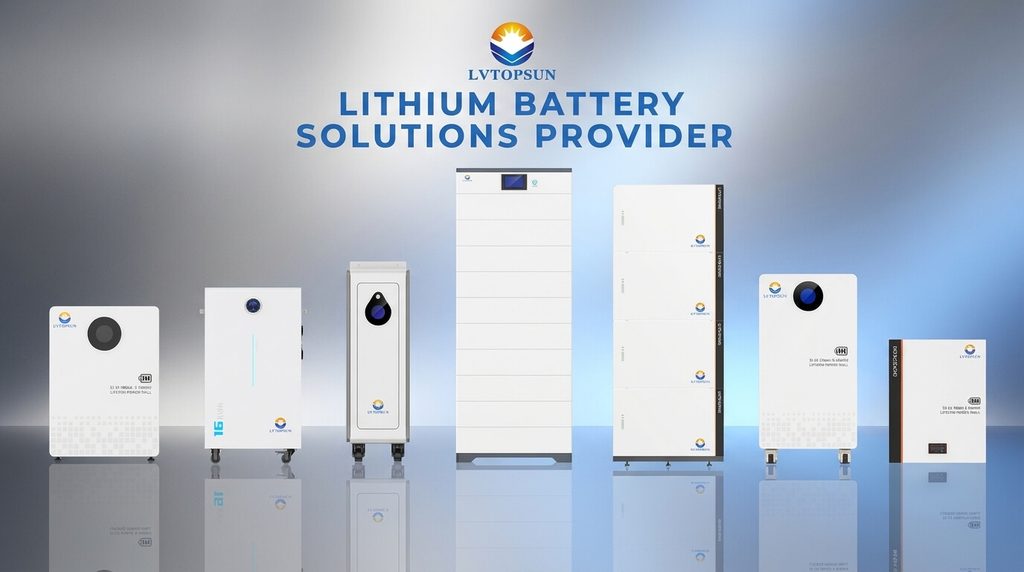
However, selecting the ideal setup requires looking past basic capacity numbers. To help you choose the right residential energy storage system, here is a comprehensive breakdown of the core technical factors, safety standards, and operational details you must consider.
1. Primary Usage: What Is Your Storage Goal?
Before looking at technical specifications, define the primary function your system needs to serve:
- Self-Consumption Optimization: Storing excess daytime solar power to run household appliances during expensive evening peak hours.
- Emergency Backup Power: Providing seamless uninterruptible power supply (UPS) to critical circuits during power outages.
- Grid Arbitrage & Dynamic Tariffs: Charging the battery during off-peak or negative price hours and discharging during high-rate periods.
2. Battery Chemistry: Why LiFePO4 Is Essential
Safety, cycle life, and thermal resistance should dictate your choice of battery cell technology. Modern high-performance residential systems rely almost exclusively on Lithium Iron Phosphate (LiFePO₄).
WHY LiFePO4 CHEMISTRY LEADS
Compared to traditional lead-acid batteries or NMC chemistries, $\text{LiFePO}_4$ batteries deliver a lower levelized cost of storage (LCOS) over a 15+ year operational lifespan.
3. Capacity (kWh) vs. Power Rating (kW)
Understanding the distinction between how much energy a system holds versus how fast it can deliver that energy is critical when you choose the right residential energy storage system:
- Capacity (kWh): Represents total energy storage. A 10 kWh battery can continuously supply a 1 kW load for approximately 10 hours.
- Power Output (kW): Represents peak and continuous load handling. A higher power rating is needed if your system must start heavy inductive loads like heat pumps or air conditioners.
4. Inverter Compatibility & Smart BMS Integration
A battery is only as effective as its ability to communicate with your hybrid or off-grid inverter.
- Multi-Protocol Communication: Ensure the battery’s internal Battery Management System (BMS) supports dual CAN-bus and RS485 communication protocols.
- Closed-Loop Matching: Closed-loop communication enables the inverter to receive real-time State of Charge (SOC), cell voltage, and temperature data, preventing overcharging and thermal stress.
5. Visual Comparison Table: System Architecture Types
| System Configuration | Wall-Mounted Modular | Stackable High-Capacity | Outdoor All-Weather (IP65) |
|---|---|---|---|
| Target Application | Tight indoor utility rooms | Medium-to-large residential homes | Homes with no indoor space |
| Capacity Scaling | 5.12 kWh per module | 10 kWh – 20+ kWh stacks | 15 kWh+ high-density units |
| Parallel Expansion | Up to 15–32 units | Multi-stack configuration | Scalable parallel modules |
| Environmental Rating | IP20 / IP31 (Indoor) | IP20 (Indoor) | IP65 + Self-Heating Tech |
Not sure how much capacity you need? See our [16 kWh runtime guide for 4, 12 and 24-hour blackouts]
6. HTML Product Feature & Datasheet Card
LVTOPSUN High-Efficiency Storage Series
- ✓ Tier-1 LiFePO4 Chemistry: Engineered for 8,000+ cycles at 90% DOD.
- ✓ Universal Inverter Matching: Smart BMS with multi-brand protocol integration.
- ✓ High Discharge Capability: Handles high surge currents for heat pumps and heavy loads.
- ✓ Certifications & Safety: Fully compliant with European CE, UN38.3, and IEC safety standards.
7. Installation Environment & Weather Considerations
Where you install your energy storage unit dictates its housing requirements:
- Indoor Installations (Basements/Garages): Focus on compact footprints and wall-mounting options to save floor space.
- Outdoor Installations (Facades/Pads): Require an IP65 enclosure rating to block dust and water ingress, combined with built-in self-heating technology to protect cells against freezing winter temperatures.
Final Decision Matrix for Homeowners & Installers
To choose the right residential energy storage system, cross-check these five points before placing an order:
- Is the battery built with premium, cobalt-free (LiFePO₄) cells?
- Does the system offer at least 6,000 to 8,000 lifecycle guarantees?
- Is the internal Smart BMS tested and verified with your inverter brand?
- Is the usable capacity sized to cover both daily consumption and heavy peak appliances?
- Does the housing offer IP65 rating if indoor wall space is unavailable?
For full product catalogs, technical documentation, or wholesale distribution inquiries, visit solartoeu.com.